
How I actually work.
I am one person, but I do not work alone. I have built myself a company of AI agents: a digital CEO that coordinates, and five teams that do the work. I did not buy it: it does not exist to be bought, I designed it myself one piece at a time and I am still adjusting it, after every job.
This page exists because when I tell people in person, they always ask me to explain it again. So I am writing it down, in full, without pretending it is more magic than it is.
Who is in charge, who coordinates, who does the work
At the top there is me. I decide what gets done and what does not, how it has to turn out, and what goes out of the door. If something does not convince me it does not go out, and there is nobody who can overrule me.
Under me there is a digital CEO, which I have called Jarvis. It is an AI agent and it builds nothing: its trade is coordinating. It takes the objective from me, works out which teams are needed, hands out the work, checks that what comes back is up to it and reports it to me. It does what a director does in a company: it does not hold the tools, it holds the picture.
Under Jarvis there are the teams, each one specialised in a trade. They are not generic programs I ask favours of: they are squads built on purpose, each with its own instructions and its own way of working, tuned job after job. When something does not work I do not change tool: I correct the instructions, and from then on every job after that comes out better.
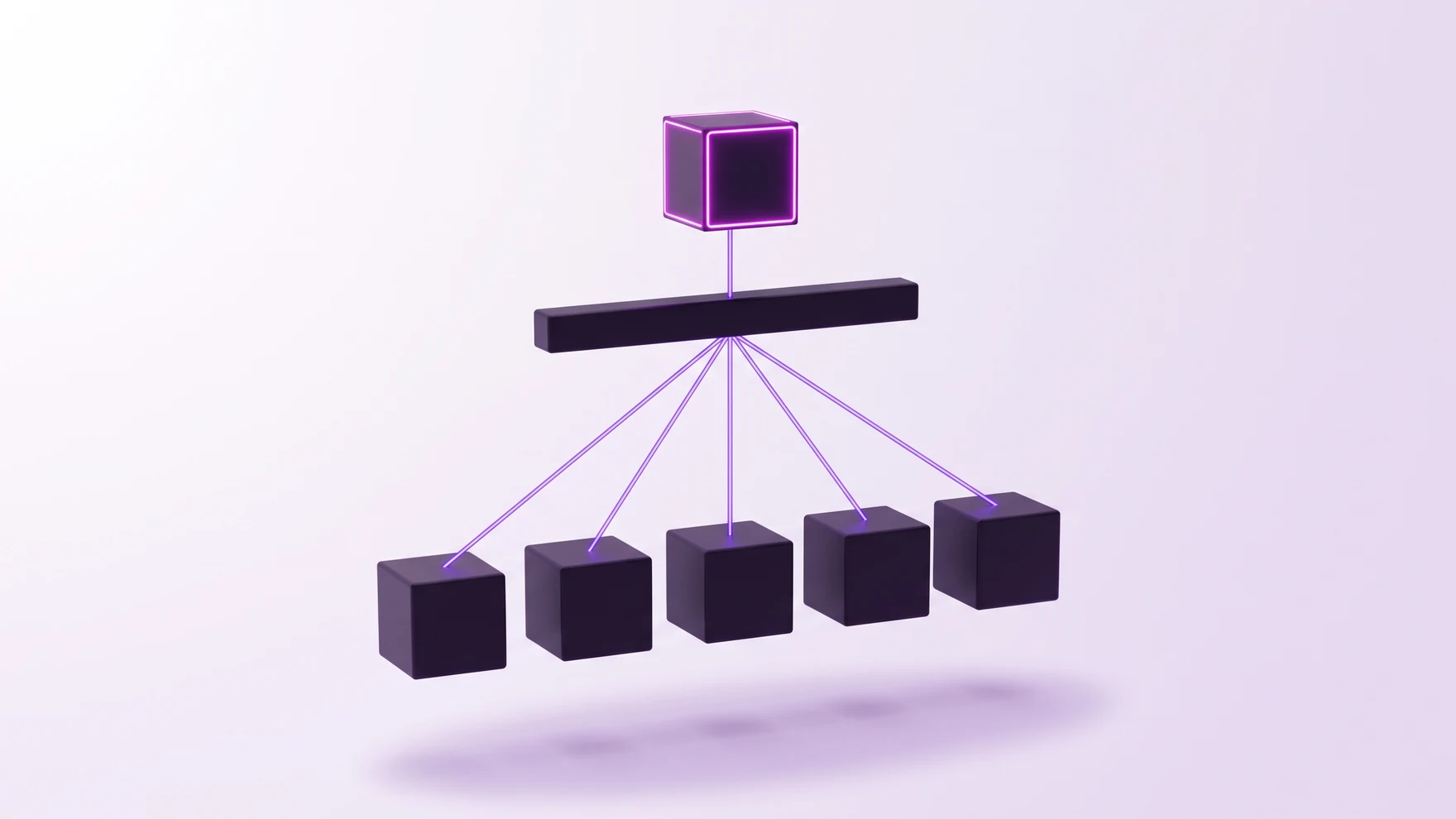
The five teams
Websites and online shops
It is the most seasoned team, and most of what you see in the portfolio came out of here. Inside it are the trades of an agency: whoever studies the business and the competitors, whoever decides the structure of the pages, whoever writes the texts, whoever builds, whoever goes back over everything at the end hunting for mistakes.
Phone and desktop applications
Tools that open in a browser and work the same way from a phone, a tablet and a computer, without downloading anything. It is the team that built the dashboard for a sports coach, with the athletes’ records and the membership renewals.
Custom management software
The warehouse, the diary, the orders, the kitchen tickets. These are the most delicate jobs, because every company has its own round and no bought program guesses it. Here the team builds on the way of working that is already there, instead of asking the company to change it.
Automation with artificial intelligence
The team that comes up with the automations and programs them: answering customers, preparing documents and quotes, following orders and reminders. It is also the team that built a good part of the others: the automations I sell, I use first.
Quotes
It prepares the proposals: what a job includes, in what order it gets done, how it gets explained so that it is understood. The price, though, I decide, always. That one I have not delegated and I have no intention of delegating.
How they hand the work over
The round is always the same, and it can be told in five lines.
I give the objective: “this company does this, it has this problem, it needs this”. Jarvis breaks it down and decides who works and in what order. The first team gathers the information and passes it to the second, which designs it; the design goes to whoever builds; at the end it passes through whoever checks, who looks for the mistakes and sends back what is not right. At every handover I look at what has come out and decide whether we go on or do it again.
It is not an assembly line that runs by itself: it is an assembly line with me inside it, at every gate. It is slow in the places where thinking is needed and fast where only work is needed.

What I do myself
What I do not delegate is the part that decides whether a job is good or mediocre.
I decide what to build.
The goal, what that customer actually needs, and what instead is a pointless cost that I talk them out of.
I put in the taste.
A technically correct job can be ugly, dull or off key. That part I see, and when I do not like it I have it done again.
I talk to you.
The first message, the call, the meeting, the answer six months later when a change is needed: always me.
I take the responsibility.
If something comes out wrong it is not an agent’s fault: it is mine, for letting it through.
What the agents do not do
A company is judged by where it puts its limits, too. These are mine, and there are four of them.
The relationship with the customer.
Every communication you receive (a message, a proposal, the answer to a technical question) goes through me. The person on a project is one person, from the start to the delivery and after it too.
The financial decisions.
A team prepares the proposal; the price I set myself, case by case, looking at the work there is to do.
The delivery.
Nothing gets published, sent or delivered without me having gone over it. It is the last gate of the process and it always goes through me.
The use of uncertain data.
When a piece of information is not verified, the internal rule is to leave it empty and flag it, never to fill it in on a hunch. It applies to the agents exactly as it applies to me when I write to you.
Why I am telling you this
For two reasons, and neither of them is “because it looks good”.
The first: it is the reason I cost less and arrive sooner. I do not have a structure to keep up, and I have more arms than I look like I have. If I did not explain it to you, the only explanation left for a low price would be that the work is worth little. And that is not it: more hours end up on your project than one person on their own would put in, not fewer, and that is why a website, when it is needed, I can deliver in 24 hours.
Do not misread the word “automatic”: I work a lot. The agents do not work instead of me, they work alongside me and take the mechanical hours off my hands, the ones where no thinking is needed. The time I free up I do not spend looking out of the window, I spend it on the part of the work that decides whether a result is good or mediocre.

The second: because it is the work I sell. If I build you an automation or teach you to use AI in your company, I am selling you something I have already built for myself. You can judge the result by looking at how I work, not by listening to what I promise.
Frequently asked questions.
It gets made by a team that I direct. The agents do the heavy, repetitive work; I decide what to build, I check every step and I have redone whatever is not up to it. The result goes out with my name on it. The tools count, but the difference is always made by whoever governs them.
They do, the way anyone does. That is why there is a team that checks the work of the others, and there is me at the last gate. When I find a mistake I do not just correct it: I correct the instructions, so that mistake does not come back on the jobs after it. It is the one real advantage of working this way.
In part yes, and it is one of the services I sell. I will not build you a company of agents overnight, but the piece that costs you the most time can be automated, and I can teach you to use these tools in your own work. You start from one process, the one that weighs on you most.
Would you like to work this way too?
Tell me what you do and what takes most of your time. I will tell you what can really be automated, and what cannot.